
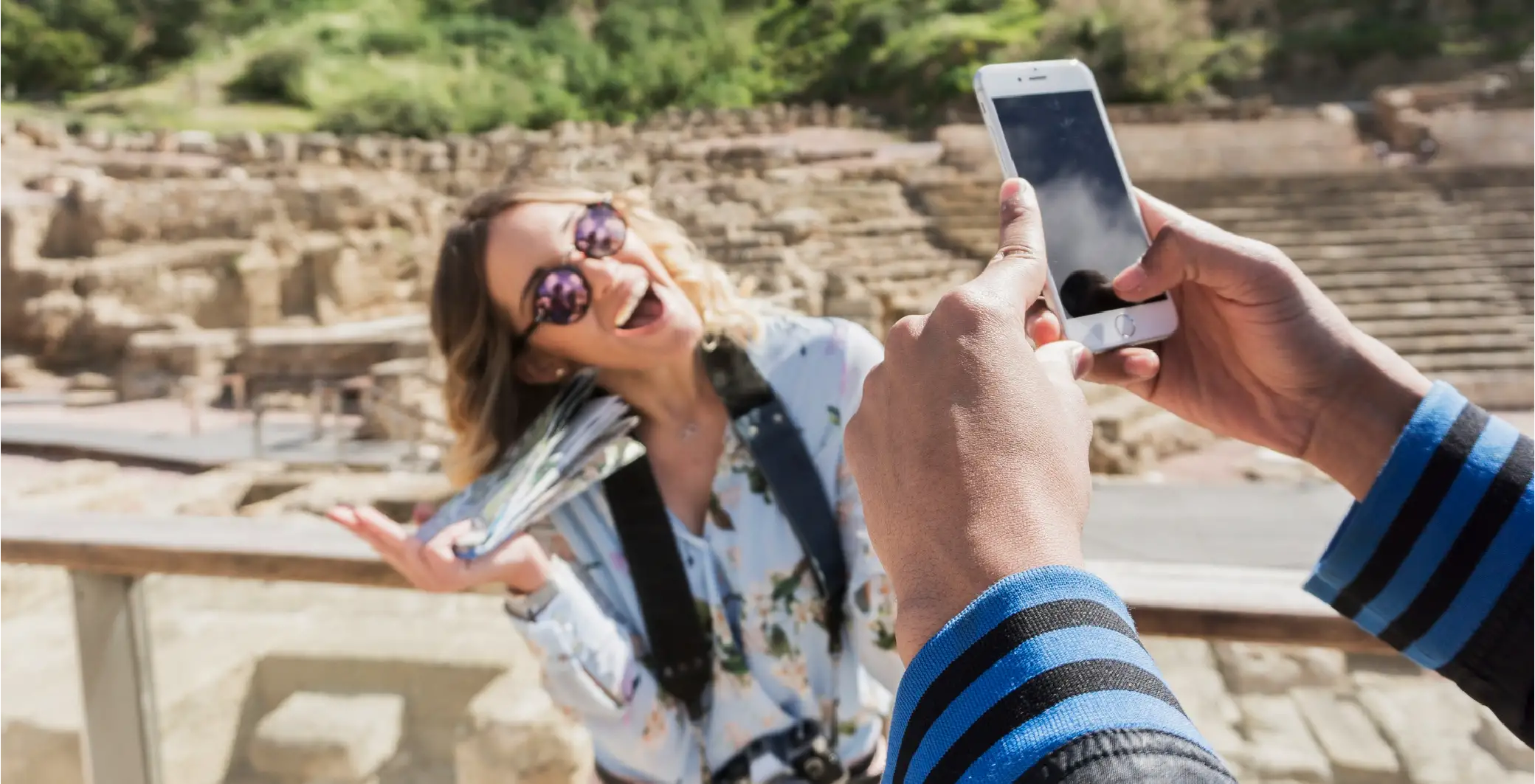
عشر نصائح لتوفير المال في رحلتك القادمة
نصائح عملية تساعدك على تقليل تكاليف السفر دون التضحية بجودة التجربة.
Food & Drink
Egyptian Cuisine🔗
All over Egypt — and especially in Cairo — you will find an enormous range of high-class restaurants serving international cuisine: Italian, Chinese, Japanese, Mexican, Indian, French and Lebanese, alongside international chains such as TGI Fridays and JW Steakhouse. Fruit, vegetables and seafood are all excellent.
Egyptian food shares much with other Middle Eastern and Mediterranean cuisines: stuffed vine leaves, grilled meats, and an array of dips traditionally scooped up with pitta-style bread. Rice with vegetables in tomato sauce and baked pasta dishes similar to lasagna are both common, alongside spit-broiled pigeon, lamb shish kebab, and small grilled lamb kebabs called kofta. Seafood is a highlight, from Red Sea prawns and Mediterranean sea bass to tilapia from the Nile.
Egypt’s national dish is arguably Foul Mudhammas — fava beans cooked in olive oil and garlic, flavored with lemon, cumin and parsley, and often served with an egg for breakfast. A wonderful way to sample the range of local flavors is a mezze — a selection of small dishes such as Babaghanoug (smoky mashed eggplant with sesame taheena paste), Falafel/Taameyya (deep-fried spiced fava-bean patties), Waraq Anab (stuffed vine leaves), Turshi (spicy pickled vegetables) and Leban Zabadi (thick, creamy yoghurt).
For dessert, look for honey-soaked Kunafa (shredded pastry with rose water and nuts), Basbousa (semolina cake with almonds, lemon and vanilla), and the uniquely Egyptian Om Ali — a warm baked pastry with milk, nuts, raisins and spice. Most Nile cruises include at least one themed Egyptian night with a buffet of local specialties, and fresh fruit — mangoes, pomegranates, dates, figs, apricots, melons and citrus — is abundant year-round.
💧Drinking Water🔗
Never drink tap water in Egypt. Stick to bottled water with an unbroken seal, use it for brushing your teeth, and skip ice in your drinks.
Non-Alcoholic Drinks🔗
Traditional options range from chilled carob juice and hot licorice infusion to the thick, nutty, spiced milk drink sahleb. Two favorites with visitors are karkady, a rich, sweet infusion of dark red hibiscus served hot or cold, and limoon, a frothy, tangy fresh lemonade made from small local yellow limes.
Alcoholic Drinks🔗
Alcohol is available in all Egyptian hotels and most restaurants, and bars are commonplace and popular with locals and visitors alike. Alongside familiar international brands, it is worth trying Egyptian-made wine and beer — both are pleasantly drinkable.
Wine🔗
Obélisque — made with imported Italian grapes: a tannin-rich red (Rouge des Pharaons), a light rosé (Rosetta) and a dry white (Blanc d’Alexandrie)- Gianaclis — made from Egyptian-grown grapes: a fruity red Cabernet Sauvignon (Omar Khayyam), a delicate rosé (Rubis d’Egypte) and a fresh white Pinot Blanc (Cru des Ptolémées)
- Château Grand Marquis — Egypt’s premium range, produced with French expertise: a crisp white, an aromatic rosé and a rich red
Beer🔗
Stella Local (regular lager), Stella Export (stronger), Stella Premium (dark, Belgian-style)- Meister (regular lager), Meister Max (stronger)
- Sakara Gold (regular lager), Sakara Premium (stronger)
- Löwenbräu — the famous German beer, brewed locally under license✦Heineken
Weather🔗
Egypt enjoys year-round sunshine and almost no rain, except in Alexandria, which has a more Mediterranean climate.
Daytime temperatures run from pleasantly warm in winter to very hot in summer; northern cities such as Cairo and Alexandria are typically about 5°C cooler than southerly Aswan and Abu Simbel. Desert nights can turn extremely cold, even in summer.
Average temperatures (°C):
City | Jan | Feb | Mar | Apr | May | Jun | Jul | Aug | Sep | Oct | Nov | Dec | |
Cairo | High | 19 | 21 | 24 | 28 | 32 | 35 | 35 | 35 | 32 | 30 | 24 | 21 |
Low | 9 | 9 | 11 | 14 | 17 | 18 | 22 | 22 | 20 | 18 | 14 | 11 | |
Luxor | High | 23 | 25 | 29 | 35 | 40 | 41 | 41 | 41 | 39 | 35 | 30 | 25 |
Low | 5 | 7 | 11 | 16 | 21 | 23 | 24 | 24 | 22 | 18 | 12 | 8 | |
Aswan | High | 24 | 30 | 35 | 39 | 42 | 41 | 41 | 40 | 36 | 30 | 25 | 25 |
Low | 8 | 9 | 13 | 17 | 21 | 24 | 24 | 25 | 22 | 19 | 14 | 10 | |
Sharm El-Sheikh | High | 23 | 26 | 29 | 33 | 36 | 34 | 34 | 34 | 33 | 28 | 23 | 23 |
Low | 16 | 17 | 18 | 21 | 24 | 26 | 27 | 27 | 26 | 23 | 20 | 16 |
Average temperatures (°F):
City | Jan | Feb | Mar | Apr | May | Jun | Jul | Aug | Sep | Oct | Nov | Dec | |
Cairo | High | 66.2 | 69.8 | 75.2 | 82.4 | 89.6 | 95 | 95 | 95 | 89.6 | 86 | 75.2 | 69.8 |
Low | 48.2 | 48.2 | 51.8 | 57.2 | 62.6 | 64.4 | 71.6 | 71.6 | 68 | 64.4 | 57.2 | 51.8 | |
Luxor | High | 73.4 | 77 | 84.2 | 95 | 104 | 105. 8 | 105. 8 | 105. 8 | 102. 2 | 95 | 86 | 77 |
Low | 41 | 44.6 | 51.8 | 60.8 | 69.8 | 73.4 | 75.2 | 75.2 | 71.6 | 64.4 | 53.6 | 46.4 |
City | Jan | Feb | Mar | Apr | May | Jun | Jul | Aug | Sep | Oct | Nov | Dec | |
Aswan | High | 75.2 | 86 | 95 | 102. 2 | 107. 6 | 105. 8 | 104 | 104 | 96.8 | 86 | 77 | 77 |
Low | 46.4 | 48.2 | 55.4 | 62.6 | 69.8 | 75.2 | 75.2 | 77 | 71.6 | 66.2 | 57.2 | 50 | |
Sharm El-Sheikh | High | 73.4 | 78.8 | 84.2 | 91.4 | 96.8 | 93.2 | 93.2 | 93.2 | 91.4 | 82.4 | 73.4 | 73.4 |
Low | 60.8 | 62.2 | 64.4 | 69.8 | 75.2 | 78.8 | 80.6 | 80.6 | 78.8 | 73.4 | 68 | 60.8 |
Time Difference🔗
Egypt is GMT +2 in winter; clocks move forward one hour in summer.
Documentation🔗
Travelers to Egypt must carry a valid passport with at least six months’ validity beyond the end of their stay, and containing at least two blank pages.
Check with your closest Egyptian embassy or consulate for exact visa requirements at the time of travel. For most North American and Western European nationalities, a tourist visa can typically be purchased on arrival at any Egyptian international airport; We Travel can also arrange pre-purchase of visa stamps on request. Requirements can change, so please reconfirm the latest visa rules with your We Travel representative before departure.
Security🔗
Keep travel documents, traveler’s cheques, cash, passports and other valuables in your hotel or cruise-boat safety deposit box. Street crime is minimal, but as anywhere, use common sense: avoid ostentatious jewelry and carry only small amounts of cash.
In general, you will find people hospitable and friendly — Cairo is considered one of the safest major cities in the world, and visitors can comfortably walk main city streets at night. Keep a closer eye on bags and wallets when wandering the bazaars, and women in particular are advised to dress more conservatively out of respect for local customs, especially in more traditional areas and small towns.
Health Matters🔗
Get the latest health requirements from an authorized medical source, such as your doctor, before you travel. At the time of writing there are no mandatory vaccinations for Egypt, however:
- Make sure Tetanus and Polio boosters are up to date
- Yellow Fever: a valid inoculation certificate is required if arriving from, or via, an infected or endemic area — check with your travel clinic or doctor if unsure
To help avoid getting sick during your stay, follow these golden rules:
- Drink only bottled water — never tap water
- Avoid ice in drinks
- Eat only vegetables that have been cooked
- Avoid salads and any fruit that cannot be peeled
- Avoid food that may have been sitting out, especially meats or dressings containing mayonnaise
Money Matters
The unit of currency is the Egyptian Pound (£E), divided into 100 piasters. Notes come in denominations of 1, 5, 10, 20, 50, 100 and 200 pounds, and coins in 5, 10, 20, 25 and 50 piasters. It is useful to carry local currency for tipping and for smaller souks or local restaurants; US dollars are widely accepted at major tourist establishments, hotels and souvenir shops.
There is no restriction on the amount of foreign currency or traveler’s cheques you may bring into the country; however, at the time of writing, travelers carrying Egyptian currency in excess of 1,000 USD-equivalent must declare it on arrival. Limits can change — please confirm the current threshold with your We Travel representative. We suggest changing only small amounts of money as you go, to avoid being left with a large sum of Egyptian currency at the end of your trip.
Currency Exchange🔗
One government-controlled exchange rate applies across the country, set daily and available at every bank. You can exchange currency at banks or currency exchange houses (usually open 10am–9pm daily) in most major cities; all major hotels exchange foreign currency at the same rate as banks. Keep your exchange receipt — it allows you to convert Egyptian pounds back to foreign currency at the airport, along with hotel bills, shopping and other exchange receipts as evidence of official transactions.
Banking Hours🔗
Generally 9am–2pm, Sunday through Thursday, closed Fridays and Saturdays. Cairo Airport and most major Cairo hotels offer 24-hour banking services. Bring your passport, as it will be required for any transaction.
Credit Cards🔗
MasterCard and Visa are widely accepted at major restaurants, almost all hotels, and many shops. American Express is accepted at major hotels but less widely elsewhere; Diners Club is rarely accepted.
Departure Tax🔗
At the time of writing, the airport departure tax is already included in your ticket price.
Clothing🔗
As with any country whose customs differ from your own, it is polite to dress respectfully, particularly around religious sites and while a service is in progress.
👕Dress Code🔗
Women should avoid strappy dresses, miniskirts, shorts, or low necklines in public places such as offices, markets and shopping areas. Modest dress — loose, non see-through clothing with shoulders covered — is especially important when visiting mosques, synagogues and churches.
For mosque visits, ankle-length skirts or loose trousers are ideal. Shoes are not permitted inside, so a thick pair of socks helps on sun-warmed floors (cloth shoe coverings are often available for a small tip). Save shorts and beachwear for the beach or hotel pool.
Egypt’s climate is dry year-round, so rainwear is only worth packing if you are visiting Alexandria between December and February. In winter, bring light woollens and a sweater — Cairo can turn surprisingly cool in mid-winter, so pack in layers. Travelers heading to the interior of the Sinai between December and February should pack thick winter clothing for the extreme cold. In spring and autumn, pack for both warm days and cool nights; from May to November, light cotton clothing is best.
What to Pack🔗
Beyond the clothing above, we recommend bringing:
- Comfortable walking shoes — broken-in and suited to covering long distances
- A wide-brimmed hat and scarf — for shade and sun protection, and to cover shoulders at religious sites
- Sun block and sunglasses — bring your preferred brand; both are strong all year
- Prescription glasses or a spare pair if you wear contacts, since Egypt’s fine dust can irritate lenses
- Cool wipes and moisturizing cream to counter the hot, dry climate
- Your regular medications, prescription and over-the-counter — bringing your own is easy and convenient✦Binoculars, if you like to use them
- A flashlight and spare batteries, for viewing art inside dimly lit tombs and temples
- Power adaptors — Egypt uses 220V with two-pin round plugs; some devices also need a voltage converter
- A soft, foldable spare bag for carrying souvenirs home
✈Baggage Note🔗
Egypt Air strictly enforces excess baggage charges. Travel on domestic flights with under 20kg of checked baggage where possible — your We Travel representative can arrange to store excess luggage at the hotel for your next stay.
Photography🔗
Camera or photography fees apply at most sights and museums; your guide can confirm the latest charges. Bring your own equipment, and pack high-speed film or a high-ISO setting for low-light photography such as Sound and Light shows, temple interiors and tombs where flash is not permitted; use lower speeds for bright outdoor conditions. Early morning and late afternoon offer the best light — at midday, reflective glare is intense, so a light meter, filter and a telephoto lens (120mm or longer) are useful. Pack spare batteries and a dust cover to protect your gear from Egypt’s fine sand. Always ask permission before photographing local people; your guide can help.
Photographic Restrictions🔗
Rules vary by site. Photography is generally unrestricted at open, outdoor areas such as the Pyramids and the temples of Luxor and Aswan. Some museums require a camera or video ticket (roughly E£10–100), and tripods and flashes are rarely allowed where photography is otherwise permitted. At certain museums and tombs you may be asked to leave equipment with the door custodian — your guide will advise. These rules protect fragile sites, so please follow posted signs and check with your guide if in doubt, rather than risking confiscation of your film.
Electricity🔗
Egypt runs on 220V, with the standard continental European dual round-pronged plug. If you forget an adaptor, your hotel’s Housekeeping department can usually provide one on request.
Shopping for Souvenirs🔗
Shopping in Egypt ranges from relaxed browsing in high-class souvenir stores and hotel outlets to the authentic — and sometimes wonderfully hectic — experience of the local bazaars and souks. In the souks, a healthy amount of bargaining is expected: the “right” price is simply the one both sides agree on. Enjoy the game!
Some of the loveliest, best-value souvenirs to look for:
- Gold and silver jewelry, or cartouches inscribed with your name in hieroglyphics
- Wooden boxes inlaid with mother-of-pearl
- Hand-engraved brass and copper-work
- Carved alabaster from the quarries of Upper Egypt
- Hand-sewn appliqué work with Arabic, Pharaonic, or folk designs
- Cotton galabeyyas — traditional robes and kaftans, often beautifully embroidered
- Papyrus, still made by traditional methods and hand-painted with intricate designs
Language🔗
The national language is Arabic, but you will rarely have trouble communicating: English is widely spoken in hotels and shops, French is a close second, and many staff in tourist areas also speak German or Italian.
Language Trivia🔗
Arabic is written right to left, and spoken dialects vary so widely across the Arab world that native speakers from different countries can sometimes struggle to understand one another. Egyptian Arabic is the most widely understood dialect, largely because most Arabic-language films are produced in Egypt. Written, or “classical,” Arabic, however, is shared across the Arab world — an older, more formal register that differs from everyday spoken Egyptian Arabic roughly as much as Chaucerian English differs from the English we speak today. This rich vocabulary is part of why Arabic is considered such an expressive language, and native speakers tend to have a deep appreciation for poetry and poetic song lyrics.
Useful Vocabulary🔗
English | Arabic | English | Arabic |
Egypt | Mus-r / Mis-r | Water | Maya |
Good morning | Saba-hel-kheer | Beer | Beera |
Good evening | Misaa' el-kheer | How much? | Bi-kem? |
Welcome! | A-h-lan! | That’s a lot! | Kiteer awi! |
Goodbye | Maa salaama | Beautiful | Gameel |
Please | Min fad-lak | Wow, cool! | Ishta! |
Thank you | Shok-ran | Never mind | Maa-lesh |
Yes | Ay-wa | Tomorrow | Bok-ra |
No | La'-a | Hopefully, God willing | In-sha' al-lah |
Tips | Bak-sheesh | No problem! | Ma-feesh mosh-kela! |
We wish you a wonderful journey through Egypt — and remember, your We Travel representative is always just a phone call away.


